
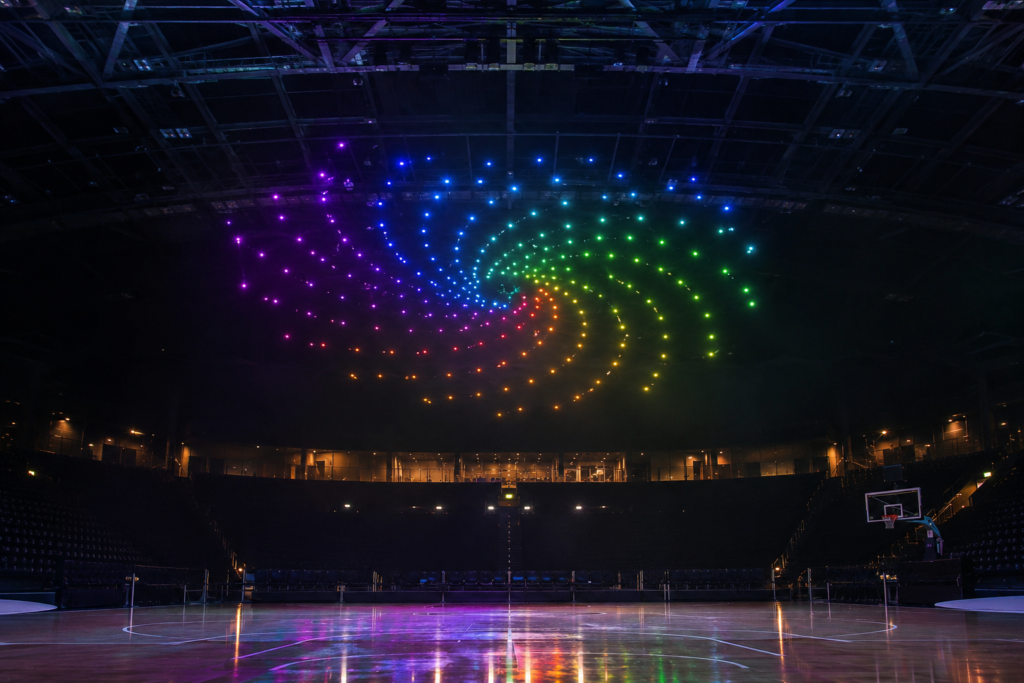
One of the most common questions we get asked is how far ahead to book an indoor drone show. It’s a fair question – this is still a genuinely new field, with only a small number of companies worldwide able to fly drones safely above people indoors, so the planning process looks a little different from booking a band or a lighting rig. Here’s a realistic timeline, and what can push it in either direction.
Why lead time matters more than you’d expect
An indoor drone show isn’t an off-the-shelf product you drop into any room. Every show is built around the specific venue – ceiling height, floor space, structural obstructions, and what else is happening in the room at the same time. If you haven’t come across the basics yet, our explainer on what an indoor drone show actually is is a good starting point before you dive into planning.
Because the choreography, the venue survey and the safety planning are all bespoke, the lead time exists to get those right – not to pad out a sales process. Rushed timelines are possible, but they narrow your options.
A typical planning timeline
3+ months out: enquiry and venue check
This is when we talk through the event, the venue, and what you’re trying to achieve. We’ll check ceiling height, floor plan and any obstructions from photos, drawings or a site visit. This is also the point to flag anything the show needs to work around – stage sets, seating plans, existing AV.
6–10 weeks out: design and choreography
Once the brief is confirmed, we design the flight sequence – shapes, formations, timing, and how it integrates with your lighting, music or video via timecode. If you want a logo, a message or a specific animation, this is where it gets built and shown back to you for approval.
2–4 weeks out: final confirmation
Running order, cues and any last changes to the venue or schedule get locked in. This is also when we confirm access times and load-in logistics for show day.
Show day
Rigging, positioning calibration and a full rehearsal happen before doors open – the drones fly the exact sequence beforehand so nothing is left to chance in front of your guests.
Older or unusual venues take a bit longer
Most modern conference centres, hotels and arenas are straightforward to plan around – the ceiling structure is documented and the floor plan is predictable. Heritage buildings, marquees, or venues with low or irregular ceilings usually need a proper site visit rather than working from drawings alone, simply to confirm there’s enough clear airspace and that the drones’ indoor positioning system has a clean line of sight. It’s not a blocker – some of the most memorable shows happen in characterful spaces – it just tends to add a step earlier in the process rather than a surprise later on.
What can shorten or stretch the timeline
A few things move the schedule in either direction:
- Venue familiarity. A space we’ve flown in before, or one with a straightforward floor plan, can move faster than a complex or unusual venue.
- Bespoke animations. A custom logo or detailed shape takes longer to choreograph than a simpler formation.
- Integration with other production. Syncing with an existing AV or lighting rig – common for conferences and corporate events – needs coordination with your other suppliers, which adds a step but is well worth it for the final result.
- Peak season demand. December, awards season and major conference months book up fastest, simply because there are still relatively few providers able to deliver indoor shows.
Frequently asked questions
Can an indoor drone show be booked last minute?
Sometimes, depending on availability and venue complexity – but it limits what’s achievable, particularly for bespoke choreography. If your date is close, get in touch anyway; it’s always worth checking.
What information do you need at first enquiry?
Date, venue (or shortlist of venues), rough guest numbers, and a sense of what you want the show to achieve – a countdown, a brand reveal, a centrepiece moment. We can advise from there.
Do noise or venue restrictions affect planning?
It’s worth checking early, especially for venues with noise-sensitive neighbours or strict event licences. We’ve covered this in detail in how loud are indoor drone shows.
If you’ve got a date in mind, the best move is to get in touch early – even a rough enquiry helps us map out what’s possible. Email hello@inflight.show or visit inflight.show to start the conversation.